
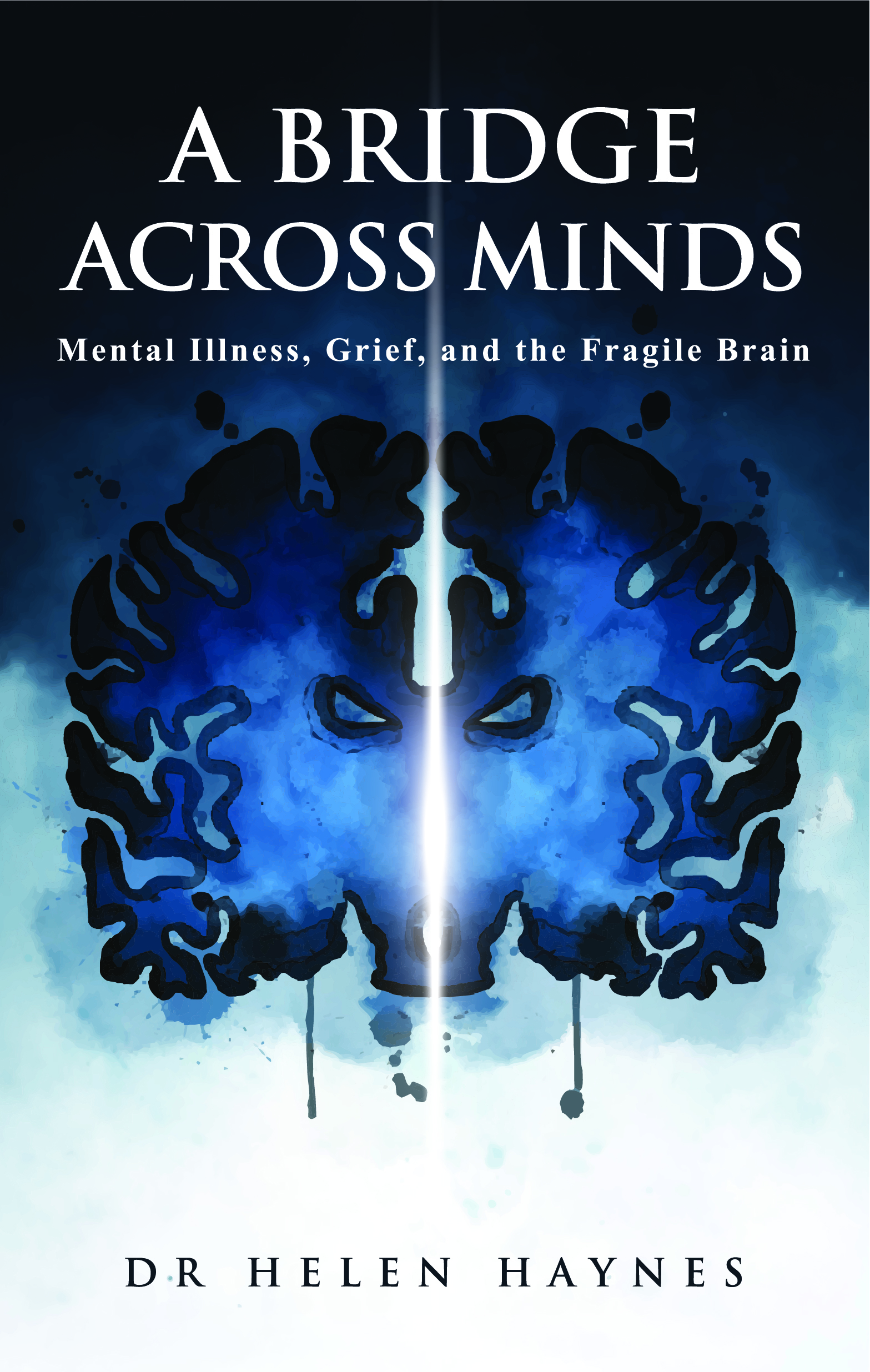
Dr Helen Haynes is an Old Age psychiatrist working in a secure unit at a mental health facility in the UK. She qualified 18 months ago as a consultant, after many years of study, work placements, and sitting the exams and is now the lead psychiatrist responsible for the facility.
Dr Elaine Patch is a recently widowed and retired consultant psychiatrist who, after the death of her husband, found that she no longer wanted to live. She was found in time and has been sectioned under the Mental Health Act and detained in a secure unit. It is Rose Ward, the ward where Dr Haynes works. Dr Patch was Helen’s mentor, a woman she wanted to emulate.
Now that they are on the same ward, albeit in different roles, Dr Patch must work through her severe depression and suicidal ideation to hopefully come out whole on the other side, while Dr Haynes uses her knowledge and learning, to attempt to bring Dr Patch back to normality. Both learn lessons they’d not have done otherwise.
Haynes tells her story through a host of believable characters, based on real people. They are indicative of the type of people typically found on a psychiatric ward in that they come from all walks of life. The pivotal moment when psychiatric help is needed differs for each patient, demonstrating how fragile the mind can be and how little we know of how it works. Haynes says, “…with the limitations of our current technology, we have not found a convincingly specific or sensitive test for any functional mental illness. Somewhere in the mind, the software is corrupted. The hardware appears fine”.
Haynes shows us this truth through her own voice discussing with us the issues her patients face. This is also through the voice of Dr Elaine Patch, who, while she has some insight into her issues, finds it easier to comment on the mental health of her fellow patients. We follow Elaine’s journey as she experiences the consequences of her attempt on her life, her ambivalence to do anything to help herself, and her gradual acceptance that only she has the power to save herself.
We see her struggle in her own words: “Grief hasn’t come all at once. It comes in waves, unpredictable and cruelly timed. Most days I am submerged, a drowning that doesn’t thrash or scream. It is a slow sinking beneath the surface. Time moves like thick water, then a flash of a memory, one I have tried to drag into the depths, breaks the surface and a wave rises. Towering and unreasonable. A tidal surge of emotion and everything I try to hold back. I hear the roar in my ears, drowning out the sounds in the room and the background noise of the ward. There is pain and pressure across my body as the waves batter me. I wait for the stillness to wash over me again. …
What I am feeling now is unfamiliar terrain. This is not stress that eases, or a tiredness that sleep can touch I don’t recognise myself in this state, and that is what frightens me most. Looking back, nothing I have lived through is comparable.”
Haynes expertly weaves the story of the new psychiatrist treating her patients and coming to terms with the reduced mental capacity of her hero with the story of the older one, the one who, after helping so many people see beyond their own struggles, has lost the ability to help herself. Haynes describes the story of the cracked and perfect pot, how one remained clean and full of water while the other reaches their destination half full and despondent. The gardener shows the cracked pot that her leaking water has helped flowers to bloom along the way, whereas the perfect pot has merely kept her water to herself.
Haynes describes Dr Patch as always striving to be the perfect pot. “Dr Patch had tried so hard to be the perfect pot. She was efficient, reliable and outstanding. Not wasting any time, energy or emotion on other matters. But the truth was, perfection leaves little behind. The perfect pot didn’t grow any flowers. Yes, it arrived full and clean, but there was no beauty or memory left behind. The cracks were never the problem; it was the refusal to look behind and notice what they had nurtured.”
A Bridge Across Minds is a well-paced, well-written discussion on the UK’s NHS mental health services as it applies to older people. Packaged with a thought-provoking cover and blurb, the book mixes anecdotes, facts, and a good story to highlight how mental health issues can strike anyone at any time, even the doctors employed to treat mental health. This is an excellent read that highlights how fragile the mind really is, and yet, the resilience of the human spirit shines through. I enjoyed this book and have no hesitation in recommending it to all.
I have awarded this book 5 stars.
